
This isn’t a post on AI (thank God). It also isn’t really a post about tech. Well, it sorta is, but tangential to tech in the sense that I’ve come to a resting conclusion that what we typically call “tech” isn’t really tech at all.
It’s also a rant, so I won’t be offended if you skip this altogether.
I.
I’ll start with a real-life example. I bought a Subaru Outback a few years ago. I didn’t really want the “tech” that the dealer was selling me — you know, basically the oversized iPad screen in the center console. I was more interested in performance upgrades because our family knew we were imminently moving to Colorado, but the added performance and super-computer capabilities were apparently two peas in a pod that couldn’t be separated.
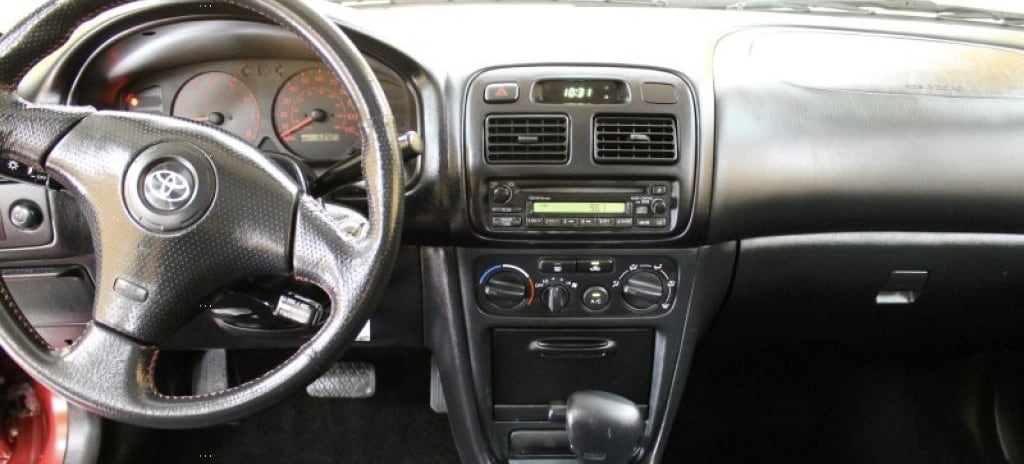
The last new car I ever owned was a 2001 Toyota Corolla and this is what the center console looked like:
This felt like a rocket ship having come from a 1989 Corolla:
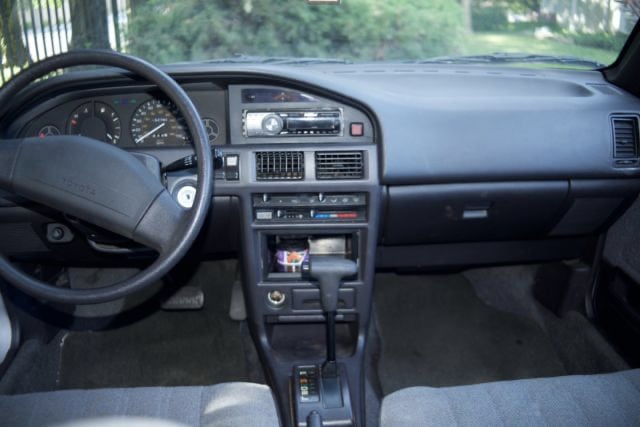
The two aren’t wildly different, but the controls had certainly evolved in the 22 years between models. Compare that with my 2021 Outback, roughly the same amount of time later:
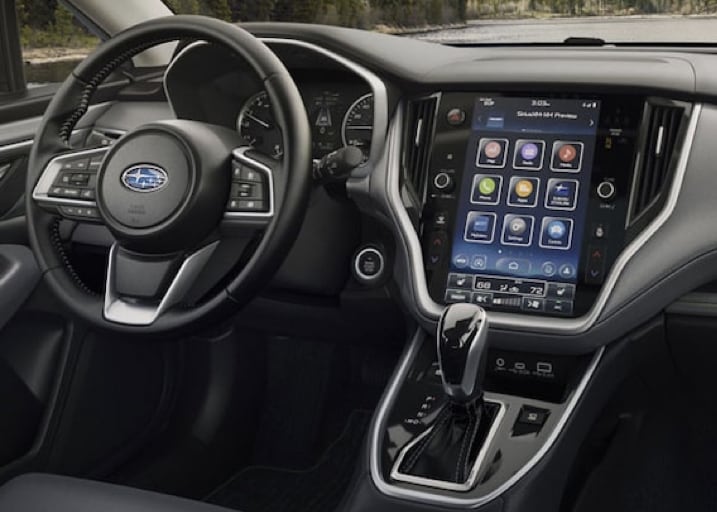
If the jump from 1989 to 2001 was like a major tech leap for me, then the jump from 2001 to 2021 was like walking into a sci-fi scene. I didn’t even know where to start, to be honest. I really wanted to tune into my favorite FM station. It might be easy for you to spot that button on the screen, but it took me a good 30 seconds. And after that, I was defaulted to a selection of SiriusXM channels, something that requires a subscription. So, I had to locate the plain ol’ radio and the controls for scanning stations. Took me a few minutes and I’m glad I wasn’t driving at the time, because my eyes would have been way off the road.
Compare that to my two Corollas. See the radio? It’s right there. Need to change a station? Turn the knob right beside it. No need for navigating several screens using virtual buttons I couldn’t feel. No need to take my eyes off the road. And guess what? No such thing as music suddenly stopping in an internet dead spot. And the 1989 was a stick-shift, baby!
My point isn’t that my older cars were better and maybe I should have stuck with them. It’s that I’m not sure the technology has really “upgraded” over the decades between these cars. Yes, I can connect a phone to it. Yes, I can beam in audio from a satellite in space. Yes, I can get turn-by-turn navigation on the fly. There are some affordances for sure.
But is it worth packing every possible feature into a single screen? I’m not so sure it is. I might even argue (kindly) that my 2021 Outback’s center console is way less usable and functional than my 1989 Corolla. A few choice reasons:
- The radio never *not* worked when I started the Corolla like it sometimes does in the Subaru. Computer chips are powerful but prone to failure. And if that goes out, so does everything else.
- I could adjust the Corolla’s heat and airflow with physical buttons and knobs that never malfunctioned and didn’t require navigating UI while I’m, you know, navigating a vehicle. I can’t underscore the extreme difference between touching a knob and tapping a super specific area of a screen you can’t differentiate from any other part of the screen.
- The Corolla’s UI was consistent and familiar. Subaru has already updated the UI of its console screen three times since I got the car, and with no notice or release notes to help know what’s changed.
Anyway, this is becoming a long-winded example. Sorry about that, because what I really want to say with all this is that what we’re sold on a consumer level is really not technology at all. It’s marketing spin disguised as modern advancement, and a really unhealthy one at that because it’s part of an incredibly addictive ecosystem designed to make us ever more dependent on certain devices and services because, clearly, the UI and usability haven’t exactly advanced. The digitation makes it all feel modern and sexy though. It’s just not cool if it’s not on a screen, functionality be damned.
II.
I want to take specific aim at mobile devices. I truly marveled at the iPhone when it first came out. I was never enticed by Blackberry’s physical keyboard at the time, but the iPhone’s virtual keyboard and relatively large viewport for web browsing certainly pushed me over the ledge. And yes, I do think those are super advancements that make a tangible — even if virtual — difference in how phones were used pre-touchscreen.
I know you know that there can be “too much of a good thing.” It’s why we don’t gobble handfuls of vitamins, wolf down entire pizzas, or go to Disneyland everyday (though I’m sure cost is a part of that last one).
I think the same thing applies to virtualizing everything possible. I’m pretty sure that the car console illustration clearly falls under the umbrella of The Law of Diminishing Returns. I’d say that’s true of nearly everything that an iPhone can do these days. It even feels silly to include “phone” anywhere in the product name because that might be one of the least used features, way below something like text messaging.
I touched on this earlier and I’m going down the rabbit hole: this really isn’t technology at all. It’s the illusion of modernization that’s no different than Las Vegas’s Eiffel Tower and pyramids being simulations of the real things. You can visit the actual Eiffel Tower, but why when you can get a cheaper plane ticket to see what looks remarkably similar to it right without leaving the States? You used to be able to use an iPod with a physical click wheel to listen to any music you want, but why when you can do the same thing on a device you already carry that doesn’t need a wheel taking up precious physical space?
I’m sure some of this is personal preference. But again, at what point do we start seeing the diminishing returns of having too much of a good thing? Again, I’d wager that the virtualization of the car console is case in point that screens don’t make everything better, more stable, or easier to use.
III.
I also touched on what I’m sure sounds like a super conspiracy theory, saying that the consumer products we’re sold as technology is an unhealthy means of creating addiction and dependence on those products and services. But we do know scientifically and anecdotally that the things packed into devices are designed and engineered to increase usage. There are plenty of academic studies out there, I’ll let you toss a rock and hit one.
I’ll pick on Facebook and why Meta ignores its own internal research. They know the effects their product has on mental health are also the reasons they retain high market value in the form of active users. It’s all about that sweet sweet dopamine, man. But hey, how about being able to connect with that acquaintance from third grade straight from your phone, eh? Worth it.
I’m also ranting on this because I’m a parent of a teenager who begs me to get her a phone everyday for myriad reasons, not the least of which is a fear of missing out. Never mind that she has an Apple Watch and access to both a shared iPad and iPhone at home. She apparently has to be seen with it at school for it count.
I want my daughter to fit in. I want her to be included. Heck, I want her to be on top of how people in her generation communicate and get work done. But how do I do that when I know that the devices that make it all possible are akin to handing her a known addictive drug? That might sound like a sensationalized embellishment, but I think it holds. The only difference between this and the opioid epidemic is that the number deaths aren’t as visible when it’s your soul that’s dying. I mean, Steve Jobs limited screen time for his kids for a reason.
I’m not anti-tech as much as I am anti-pseudo-tech. If my daughter wanted to be, say, an archaeologist, then of course I’d want her to be up to snuff with the technology needed to enhance her work, like drones capable of taking topological surveys of geography that unveil evolution from ancient times. That’s freaking cool and undeniably useful.
IV.
OK, I’m just going to do it and get a little religious on you. Anyone familiar with me and my writing knows I don’t go here, but stick with me for a minute because I believe that what the Bible has to say about idolatry is totally relevant to today’s “tech epidemic.”
Let’s look at Psalm 115:4-8 (emphasis mine):
Their idols are merely things of silver and gold, shaped by human hands. They have mouths but cannot speak, and eyes but cannot see. They have ears but cannot hear, and noses but cannot smell. They have hands but cannot feel, and feet but cannot walk, and throats but cannot make a sound. And those who make idols are just like them, as are all who trust in them.
The point here goes back to virtualization, simulation, and addiction. We may not view the iPhone as something many, many people worship, but I’d venture to say that a good number of you reading this would suffer withdrawals if I took your phone away for a week. You need it. You rely on it. You want the latest and greatest one. These are all forms of worship when taken together.
Your phone greatly resembles the idols described by the psalmist: it has a mouth (speaker), eyes (camera), ears (microphone), physical feeling (touchscreen), and a throat (speaker, again).
And how much do you rely on trust in it? For many of us, it’s a great deal. And if we do take the psalm to heart, then we’re all evolving into a mindless infinite-scroll of a never-ending feed in search of simulated experiences of belonging and meaning.
That’s all. I think.
12 Comments
Not really about your post, but I had a 2005 Corolla for 13 years. Never let me down.
I can’t vouch for the newer models, but they were BOSS back then. The perfect little car, really.
I enjoyed your rant, and I am tracking with you. Reminds me of post I read recently about a Casio watch. I think you are on to something. And I track with your last part.
As I was reading your rant, I thought about another article I read a couple of months ago, http://www.terrygodier.com/the-last-qui...
Mentions
Likes
Reposts